Index
Receive our newsletter
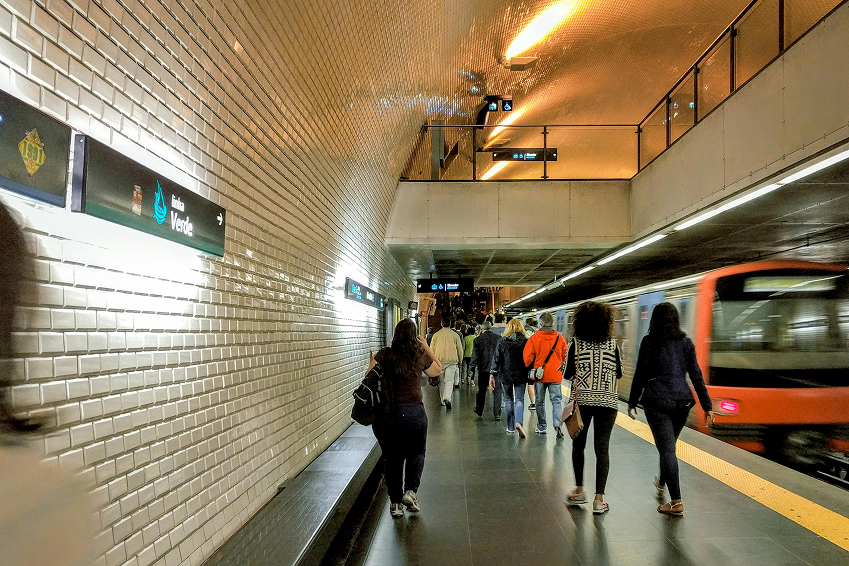
Lisbon is known for its steep hills, which can make walking more demanding, especially for those not used to physical exertion. In everyday life, public transportation becomes a real asset, helping solve practical challenges and significantly shortening travel times. The metro stands out as one of the most convenient ways to move around the city, offering strong connectivity between frequently visited areas and a system that is easy to navigate from the start.
A straightforward system
The Lisbon metro, operated by Metropolitano de Lisboa, runs on four color-coded lines. This setup makes orientation simple, even for newcomers. The network covers much of the city center, links residential neighborhoods, and reaches the airport, making it useful for both daily routines and arrivals.
Another advantage is how often trains run, particularly during peak hours. Signage throughout the stations is clear and easy to follow, with screens showing train direction and estimated arrival times. Short waiting periods combined with reliable information make a noticeable difference on busy days.
The four lines and how they are used
- The Blue Line runs along a west to east corridor, connecting residential districts with administrative and commercial areas. It works well for everyday travel and for reaching locations close to the historic center without needing to cross it on foot.
- The Green Line follows a north-to-south route through some of the city’s most active zones. It is commonly used for trips related to studies, work, or transfers to other forms of urban transportation.
- The Yellow Line links outer neighborhoods with more central areas. Many locals rely on it daily, as it connects less tourist-oriented districts with major interchange points.
- The Red Line offers a direct connection to the airport and passes through newer parts of the city. For first-time visitors arriving in Lisbon, it is often the most practical choice.
Operating hours and service flow
The metro runs daily from 6:30 a.m. until 1:00 a.m., including weekends and public holidays. Some smaller stations may close earlier, from around 9:30 p.m. Even so, the overall schedule covers most daily needs with ease. For late-night plans, it is worth considering alternatives such as the Rede da Madrugada or night bus services.
Tickets, cards, and fares
Travel on the Lisbon metro requires the Viva Viagem card, a rechargeable pass also used across the city’s public transportation network. It costs €0.50 and is available at ticket machines, station counters, newsstands, and authorized shops. Different fare options can be loaded depending on how often the system is used.
With the Zapping option, each metro ride or trip on the Carris network costs approximately €1.40 to €1.50, which is noticeably cheaper than purchasing single tickets on board. On some services, such as trams, onboard fares can reach €3.10. A 24-hour pass is also available for around €6.40, allowing unlimited travel on both the metro and Carris services throughout the day.
Lisbon metro map
The metro map presents the lines schematically rather than showing exact distances between stations. This design prioritizes clarity and makes transfer points easy to identify. Connections are marked with clear symbols, which helps plan routes involving one or two changes without confusion.
Before starting a trip, it helps to identify the departure station, the destination, and the line that connects them. If uncertainty arises, screens inside the trains display the full route and announce upcoming stops.
Practical tips
During rush hours, central stations can fill up quickly. Keeping the card ready and standing on the right side of escalators helps keep foot traffic moving smoothly. The metro allows luggage, although avoiding the most crowded cars is advisable when traveling with large suitcases.
Many stations include elevators and step-free access, though not all are fully adapted. When accessibility is essential, checking station facilities in advance is a good idea. Overall, the metro remains one of the most efficient ways to get around, providing easy access to the airport, connections to national train stations, and reliable travel between outlying neighborhoods without dealing with road traffic.
If you are considering living in other Portuguese cities, you may also find our guide 7 tips for living in Porto helpful. It covers practical aspects of daily life, from settling in to navigating urban transportation and essential services.

Jorge Padilla
Jorge Padilla, with a degree in Business Administration from Tecnológico de Monterrey and a Master’s in Marketing from Trinity College Dublin, has three years of experience in eCommerce and marketing across sectors such as Food Service, Tourism, and Education. He has worked in international environments in LATAM, Dublin, and Madrid, and holds a Google Digital Marketing certification. He is currently a Marketing Assistant at Lodgerin, managing digital campaigns, SEO optimization, and strategies for brand growth and conversion.

.jpg)

.jpg)


